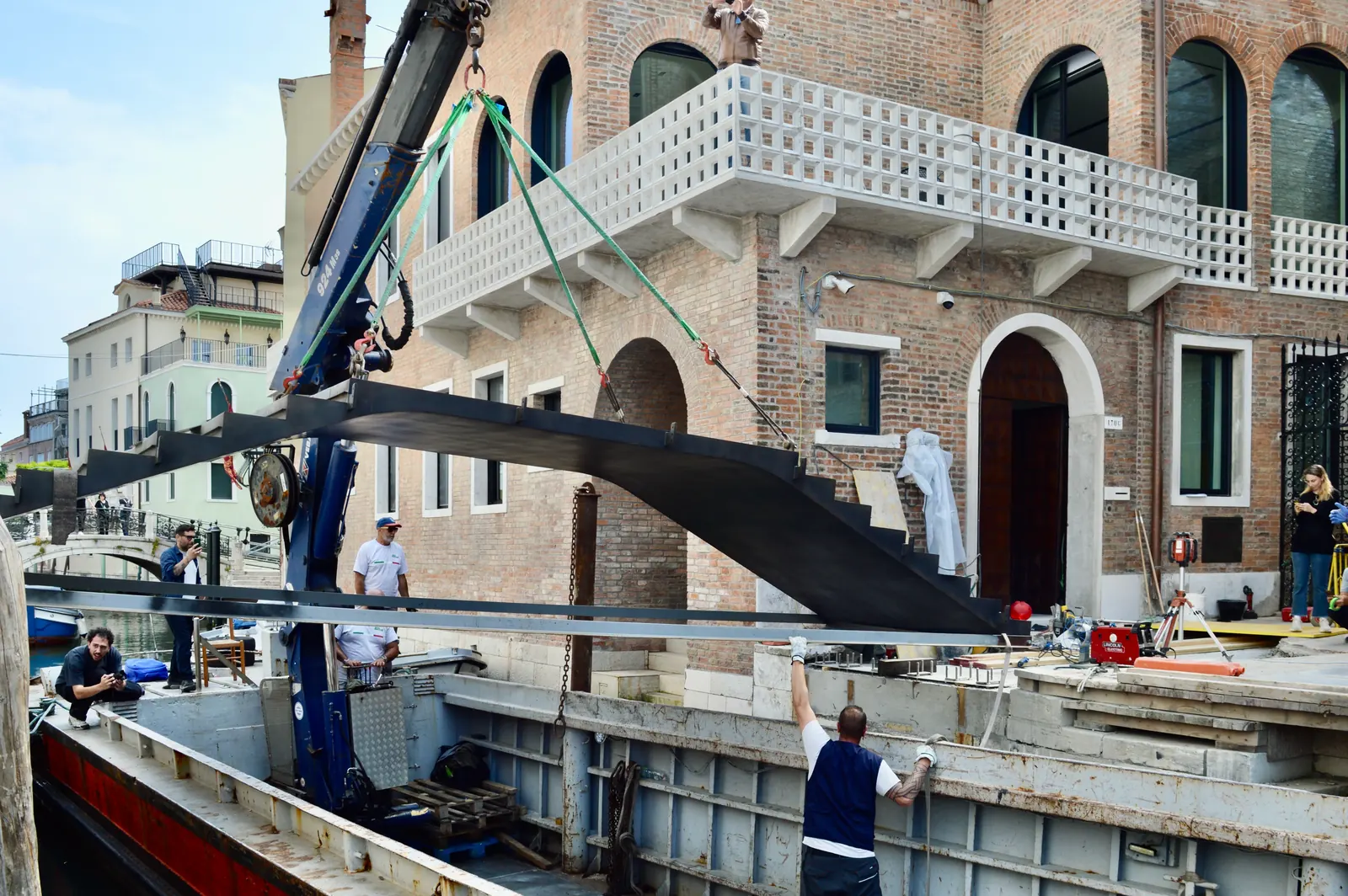
A new bridge, delivered by water.
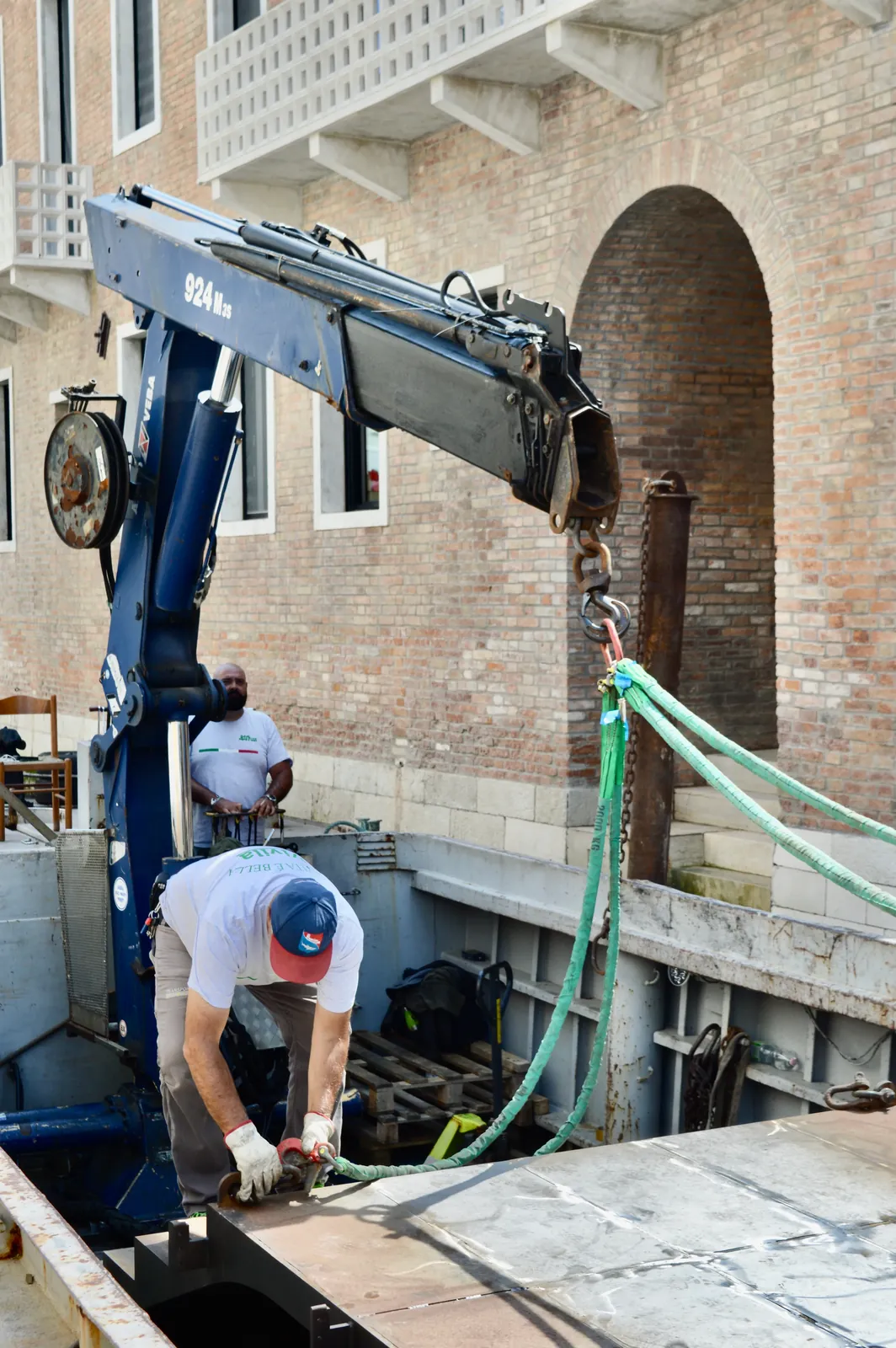
Bridges, in Venice, do not arrive by road: they arrive in a cargo hold. The steel elements — ramps and landings — were carried at water level to the rio, lifted by the onboard crane and set between the two banks. The boat works as the site yard: storage, workbench and lifting platform in one.
It is the job that sums up the trade: bringing into a city of water something that anywhere else would travel on a lorry, and threading it through a canal a few metres wide.
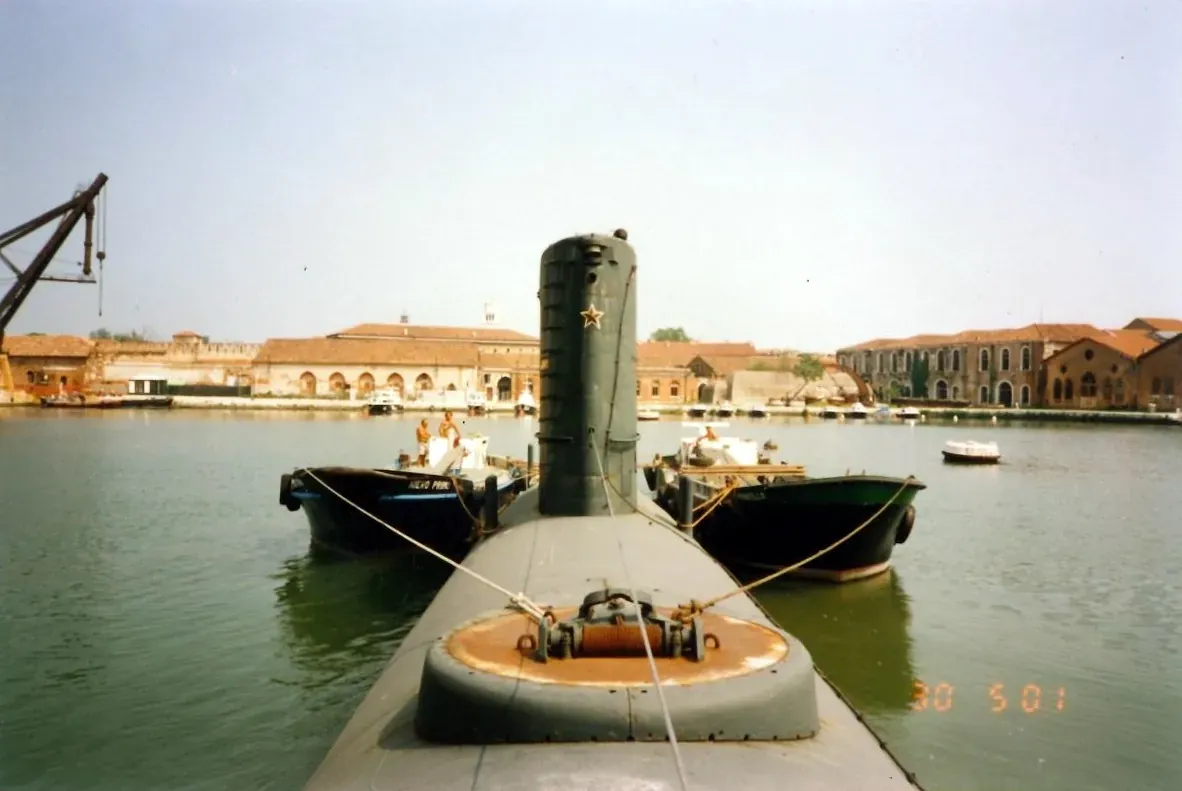
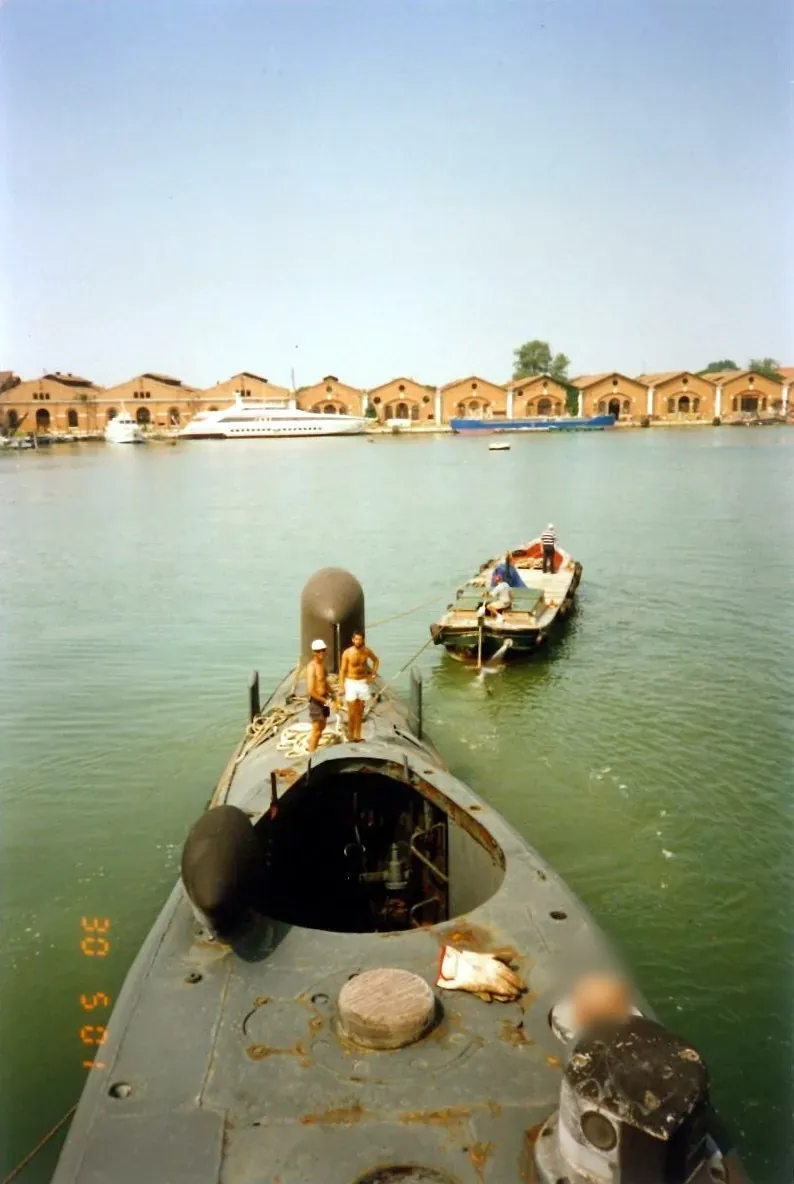
The day of the submarine.
In 2001 the Dandolo — S 513 — crossed the basin to reach the Arsenale Corderie. A tow is a slow manoeuvre: support hulls at the flanks, the bow finding its line, the final approach before the sheds. Our boats provided escort and assistance up to the mooring.
The Dandolo is still there, in front of the museum: now and then, passing by, we say hello.
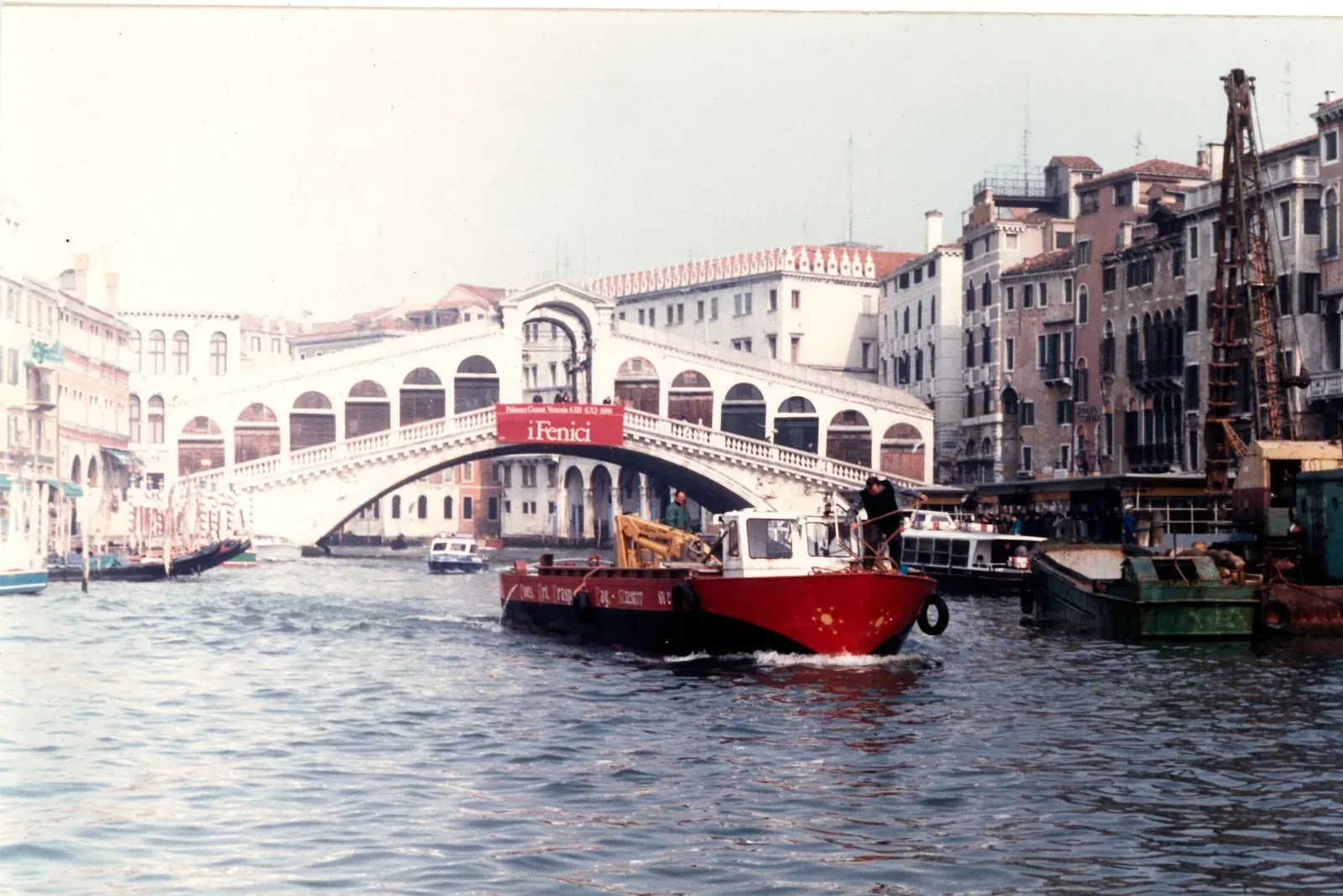
1988: the Phoenicians come up the Grand Canal.
For the great «I Fenici» exhibition at Palazzo Grassi, 1988 brought crates, fittings and a banner hoisted at Rialto. The consortium's motobarche shuttled between warehouses and the palazzo: art, in Venice, always arrives by water.
Redentore 2020: stages on the water.
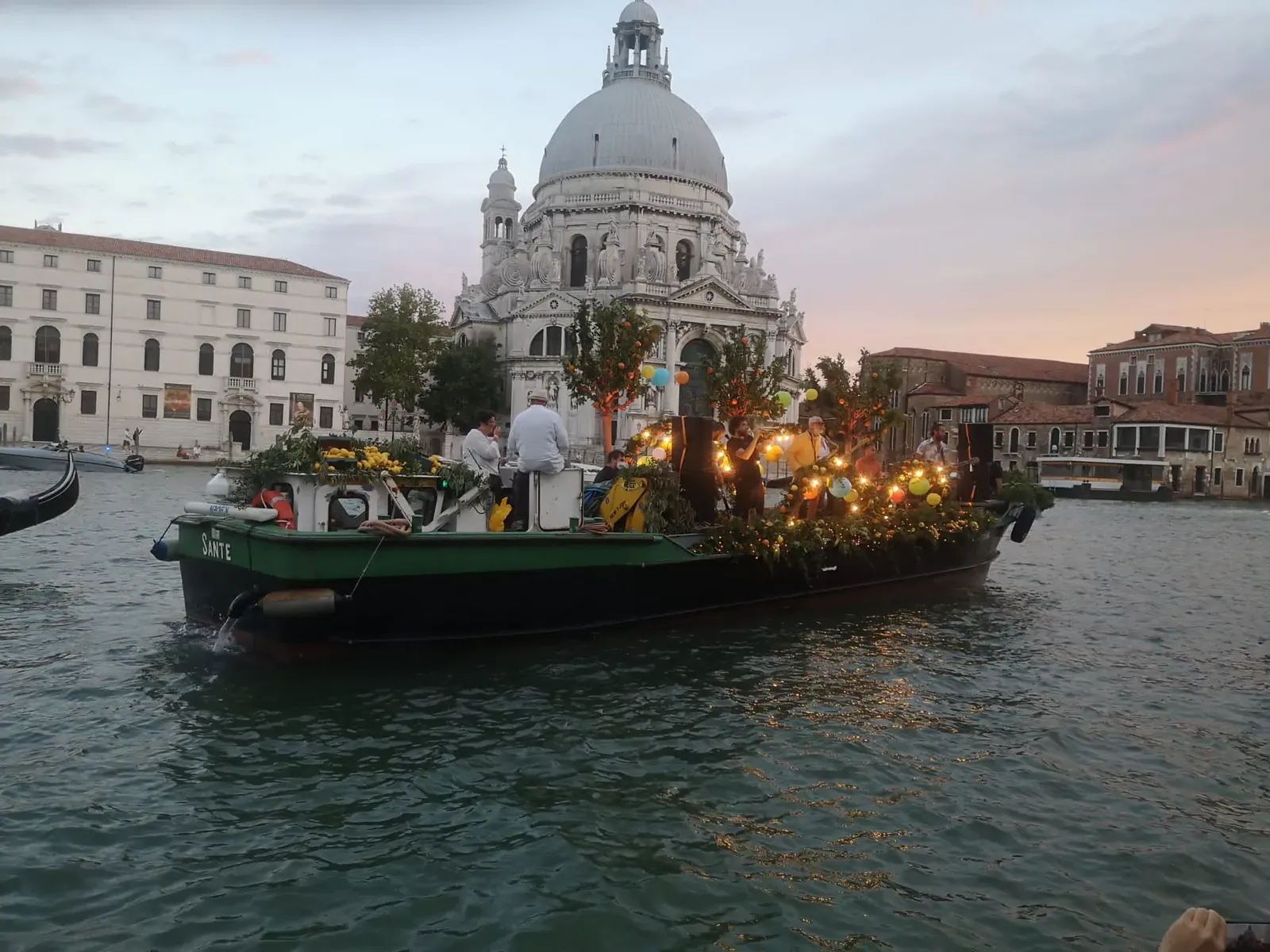
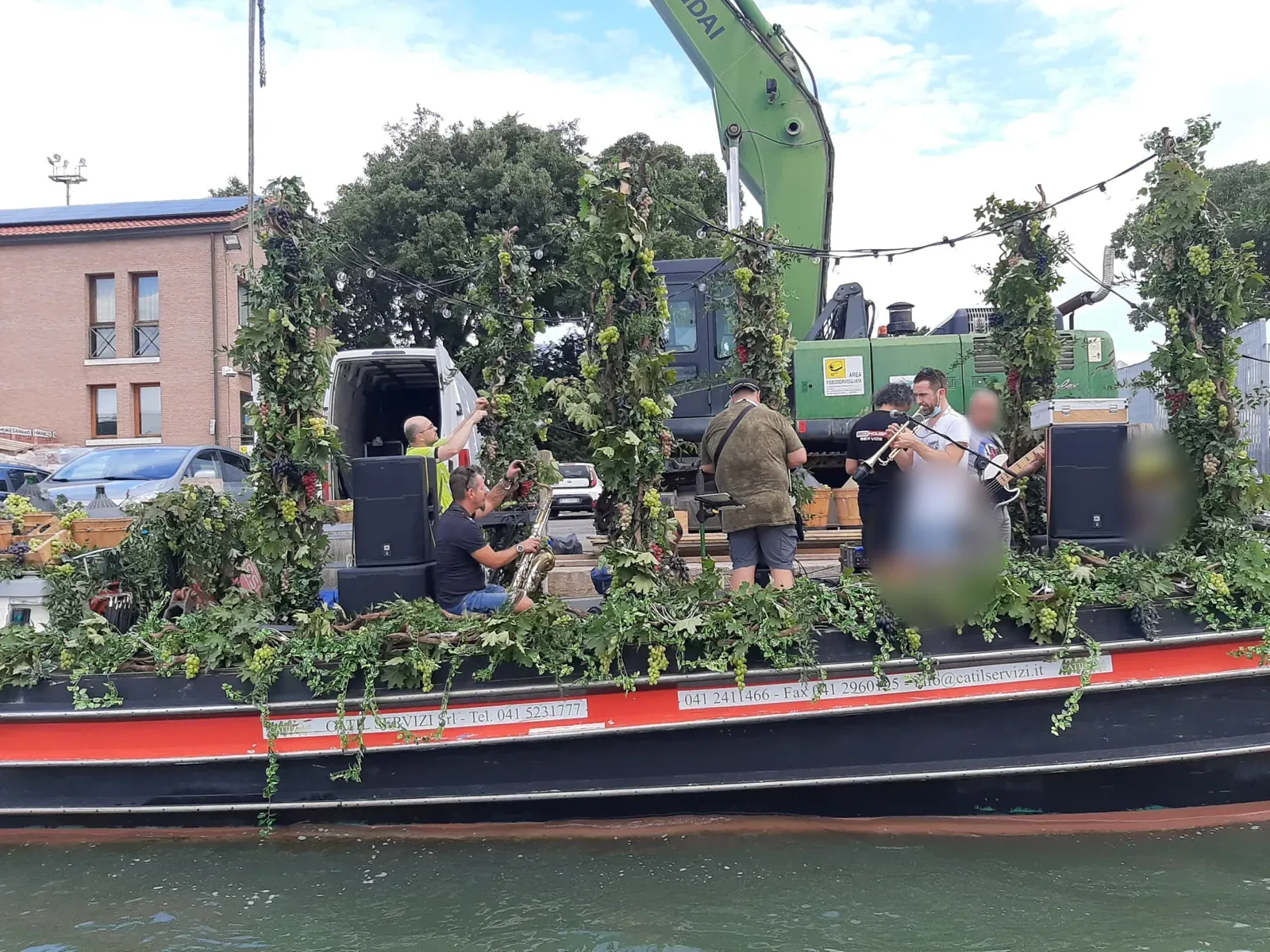
The summer of distancing called for a different Redentore: the music moved onto the boats. Vine pergolas, orange and lemon trees, paper lanterns — motobarche turned into floating stages, bands on board, the festival carried along the banks.
One evening, before the Salute, the lit boat looked like a small theatre adrift.
The rest is in the gallery.
The full photos of these jobs — and of all the others — are in the case history, with captions.